
How to Protect a Commercial Building from Water Damage: The Numbers Cabaret Fix
The Danger Zone: Where the Wall Meets the Awning
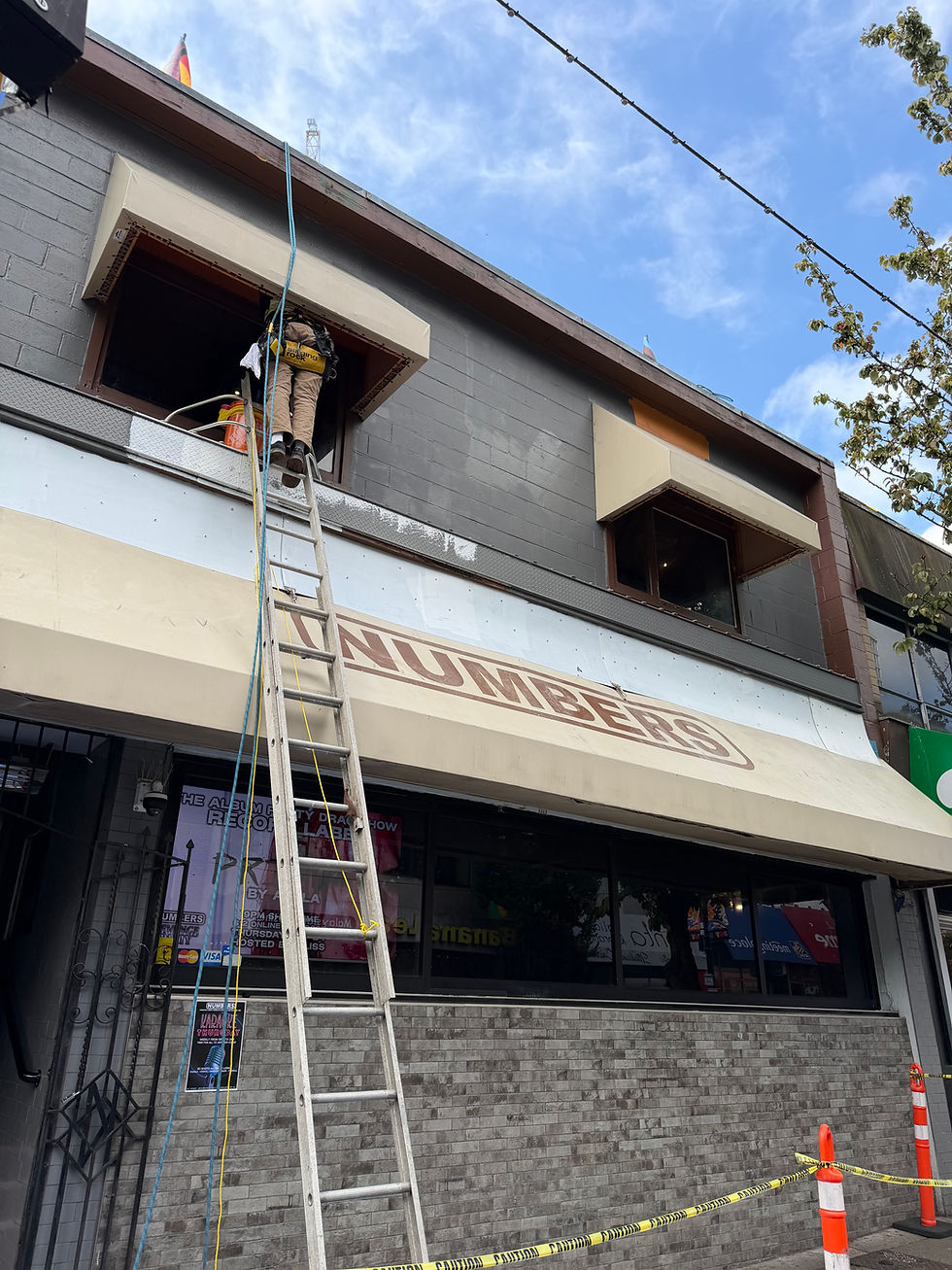
One of the highest-risk areas for a commercial leak is a transition wall—specifically the vertical wall space between a main exterior brick wall and a lower storefront awning, shade, or overhang.
We recently tackled this exact challenge during a structural waterproofing project at Vancouver's iconic Numbers Cabaret on Davie Street.
When heavy rain hits the upper brick building wall, it sheets straight down. If it hits the unshielded seam where the prominent storefront awning attaches to the building, gravity forces the water directly into the gap. Without a proper barrier, you are guaranteed to get water behind the storefront facade and into the interior walls.
How We Fastened and Sealed metal
You cannot just lean a piece of metal against a building and hope for the best. To ensure this barrier outlasts the elements, we followed a strict professional process on-site:
Mechanical Fastening: We secured the metal piece firmly into the structural wall framing right along the awning line using heavy-duty, weather-resistant fasteners spaced tightly together. This keeps the metal completely rigid so it won't shift or buckle when the building expands and contracts with changing seasons.
The "Behind-the-Metal" Barrier: Before driving the structural fasteners home, we applied a commercial-grade, waterproof backing membrane behind the metal strip. This ensures that even if water somehow got past the outer layer, it could never touch the building's core.
The Industrial Top Seal: A common mistake is relying on cheap silicone that cracks in the sun. We sealed the entire top edge of the metal flashing using a high-performance, UV-stable polyurethane sealant. This creates a flexible, watertight bead that channels 100% of the cascading rainwater over the metal piece and safely away from the lower shade structure.
Complete Protection: Commercial Painting & Sealing
Applying premium, elastomeric coatings to the surrounding exterior walls adds an extra layer of thick, waterproof armor that breathes but won't let moisture through.
Commercial Waterproofing FAQ
What is the best way to waterproof a commercial roof-to-wall transition?
The best way is to mechanically install a single, continuous piece of metal flashing fastened into the structural framing, backed by a waterproof membrane, and sealed at the top with a UV-stable polyurethane sealant.
Why does caulk fail on commercial building joints?
Standard caulk fails because buildings naturally expand and contract with temperature changes. Over time, cheap sealants dry out, crack, and split under the sun. Mechanical metal flashing is required to shed the bulk of the water volume.

Comments